
The Art of Fluid Simulation
.png "Fluid simulation") |
| The art of fluid simulation |
Fluid simulation is a key component of creating visually
stunning and realistic visual effects in 3D animation and VFX. Whether it's
water, fire, or other fluids, the art of fluid simulation requires a deep
understanding of physics and a mastery of specialized software tools. In this
blog, we'll dive into the world of fluid simulation and explore the techniques
used to create realistic fluid effects in 3D animation and VFX.
What is Fluid Simulation?
Fluid simulation is the process of creating a realistic
representation of fluid behavior in a digital environment. This includes the
physics of how fluids move and interact with objects, as well as how they
appear visually. Fluid simulation is used extensively in 3D animation and VFX
to create a wide range of effects, including water, fire, smoke, and
explosions.
The Techniques Used in Fluid Simulation
There are several techniques used in fluid simulation to create realistic and visually stunning fluid effects. Here are some of the most common techniques:
- Grid-Based Simulations: Grid-based simulations involve dividing the fluid into a grid of cells and simulating the flow of the fluid within each cell. This technique is commonly used to create large-scale fluid effects, such as ocean waves.
.png "Grid-Based simulation") |
| Ocean made by grid based simulation |
- Particle-Based Simulations: Particle-based simulations involve simulating the movement of individual particles within a fluid. This technique is commonly used to create smaller fluid effects, such as raindrops or splash.
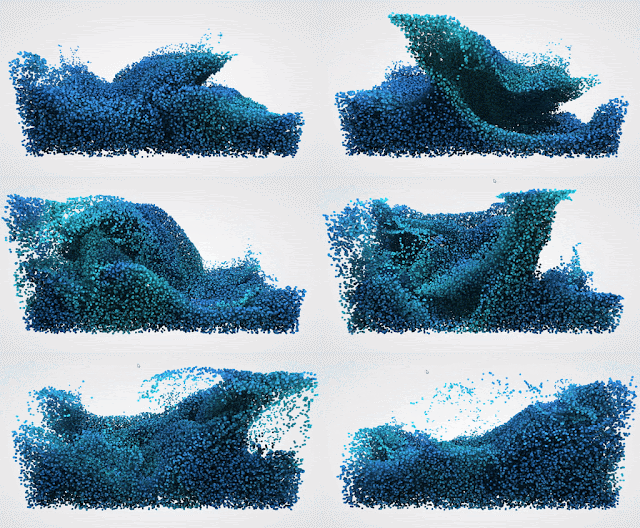 |
| Water made with particles |
- Volumetric Simulations: Volumetric simulations involve simulating the fluid as a volume and then rendering it as a 3D object. This technique is commonly used to create smoke, clouds, and other atmospheric effects.
.png "Volumetric Simulation") |
| Clouds Made using volumetric simulation |
- Hybrid Simulations: Hybrid simulations combine two or more of the above techniques to create more complex and realistic fluid effects. For example, a hybrid simulation might combine grid-based and particle-based simulations to create a waterfall.
.png "Hybrid Simulation") |
| Water fall made using hybrid simulation |
The Software Used in Fluid Simulation
There are several software which are available for fluid
simulation in 3D animation and VFX. Some of the most commonly used software's are:
- Houdini:
Houdini is a 3D animation and VFX software package that is widely used in
the film and television industry. It includes a powerful set of tools for
fluid simulation, including particle-based and grid-based simulations.
- Maya:
Maya is another popular 3D animation and VFX software package that
includes tools for fluid simulation. It is commonly used to create water
and other fluid effects.
- RealFlow:
RealFlow is a specialized software tool designed specifically for fluid
simulation. It includes tools for both particle-based and grid-based
simulations.
- Blender:
Blender is a free and open-source 3D animation and VFX software package
that includes tools for fluid simulation also known as mantaflow. It is often used by independent
animators and smaller studios.
One of the latest developments in fluid simulation is the
use of machine learning techniques to improve the accuracy and speed of
simulations. Researchers are using neural networks and deep learning algorithms
to create more realistic fluid simulations with fewer computational resources.
This approach involves training the neural networks on a large dataset of fluid
simulations, and then using the trained network to predict the behavior of fluids
in new simulations. Another development is the use of real-time fluid
simulation in virtual and augmented reality applications, allowing users to
interact with and manipulate fluid in real-time. Additionally, there has been
progress in simulating complex fluid interactions, such as the behavior of
fluids in the presence of obstacles or the interaction of fluids with soft
bodies.
Conclusion
The art of fluid simulation is an essential component for creating visually stunning and realistic visual effects in 3D animation and
VFX. From water to fire to smoke, fluid simulation techniques are used to
create a wide range of effects that add depth and realism to digital
environments. With a deep understanding of physics and the right software animators and VFX artists can create truly breathtaking fluid
simulations that bring their projects to life.
.png)


.png&description=The Art of Fluid Simulation (Mantaflow))